Jumping is wild, fast, and wonderfully exhausting, and that is exactly why we take safety very seriously. Most injuries in trampoline parks are caused by a handful of avoidable things, and we have built our entire approach around that. An honest look behind the scenes: this is how we keep everyone safe.
A jump coach in every zone
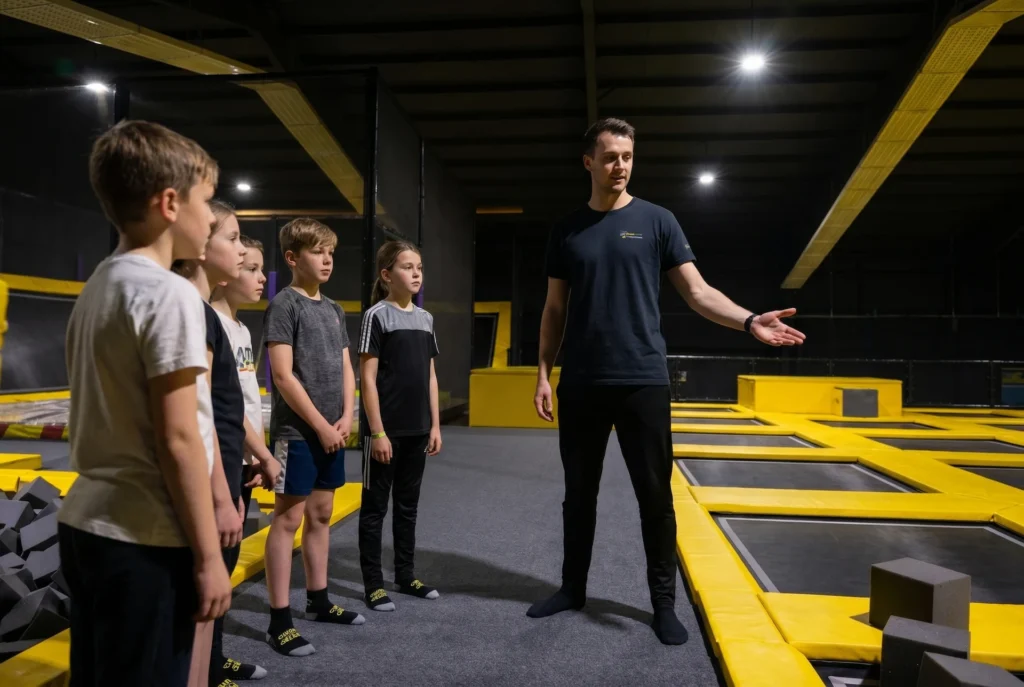
The most important part of our safety is right there on the mat. In every zone, there is a trained jump coach who explains the rules, monitors jumping behavior, and intervenes before things go wrong. For example, they make sure that not too many people are jumping on one surface at the same time, that the foam pit is used one person at a time, and that no one tries flips above their skill level.
For groups and parties, we maintain generous supervision ratios. The younger the jumpers, the more eyes on them. Our coaches know the difference between a hesitant jumper who needs a little encouragement and a daredevil who needs to be slowed down for a moment.
The basic rules that really make a difference
Safety starts with a few simple agreements. Everyone receives a brief explanation beforehand, and these points are central:
- Anti-slip socks are mandatory. No bare feet, no regular socks, no shoes. The grip on the mat prevents slipping.
- One person per trampoline surface. Most collisions happen when two jumpers end up on the same mat. We consciously spread out the crowd.
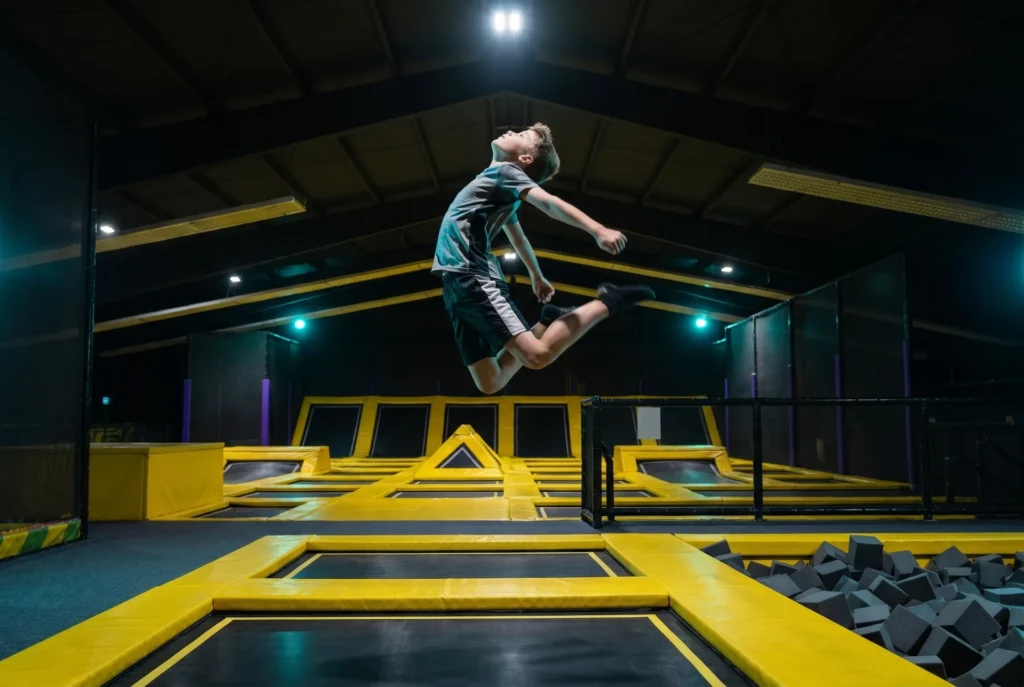
- Jump straight up and down. Bouncing wildly from mat to mat is how ankles get twisted. Control over height.
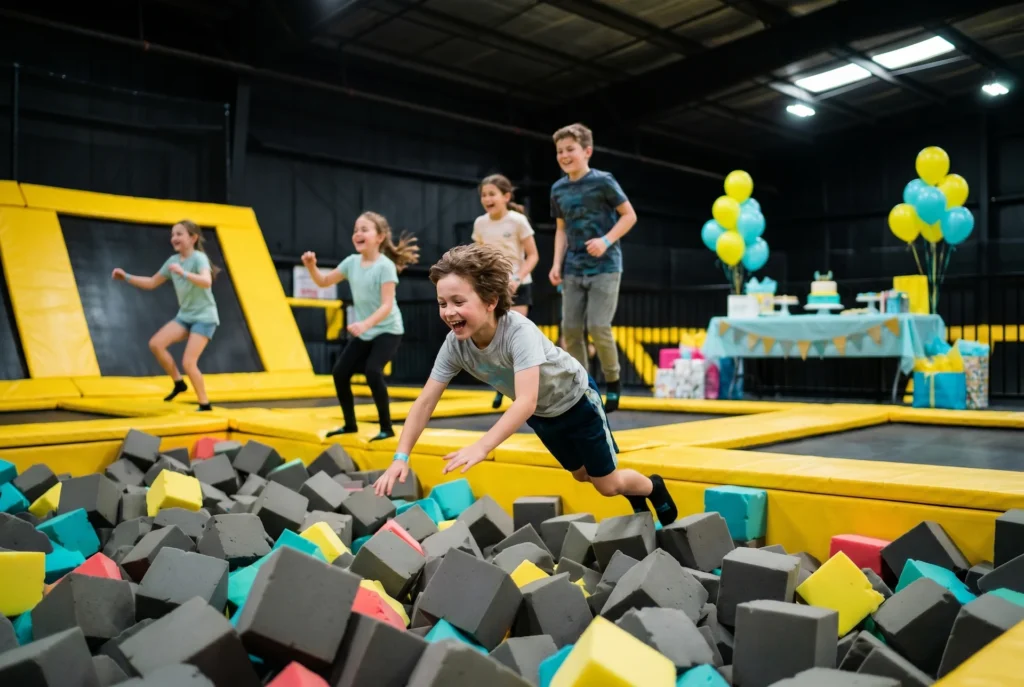
- The foam pit is one person at a time. Wait until the previous person is out, and land on your back or feet, never on your head.
- Remove jewelry, phones, and watches. These do not belong on the mat, for your safety and the safety of others.
“Tidy, safe, and good staff. You can tell they are on top of things without taking the fun out of it.”Bram, regular visitor from Venray
Inspected, checked, and maintained
The attractions themselves must be just as reliable as the people around them. All our equipment is TÜV-certified and is checked according to a fixed schedule. In addition, our team performs its own check every opening day: mats, edges, cushions, and the foam pit are inspected before the first jumper hits the mat. A first-aid kit and an AED are always present, and our coaches know how to use them.
For what age is it safe?
Jumping is possible from age 4. For the little ones, we run a separate toddler hour during quiet times, with fewer crowds and softer music. Children up to 8 years old jump under the supervision of a jumping or watching adult. And there is no upper limit: as long as you feel healthy, you are welcome, whether you are 8 or 58. Are you unsure due to an injury, pregnancy, or medical complaint? Let us know beforehand, and we will help you think it through.
What you can do yourself
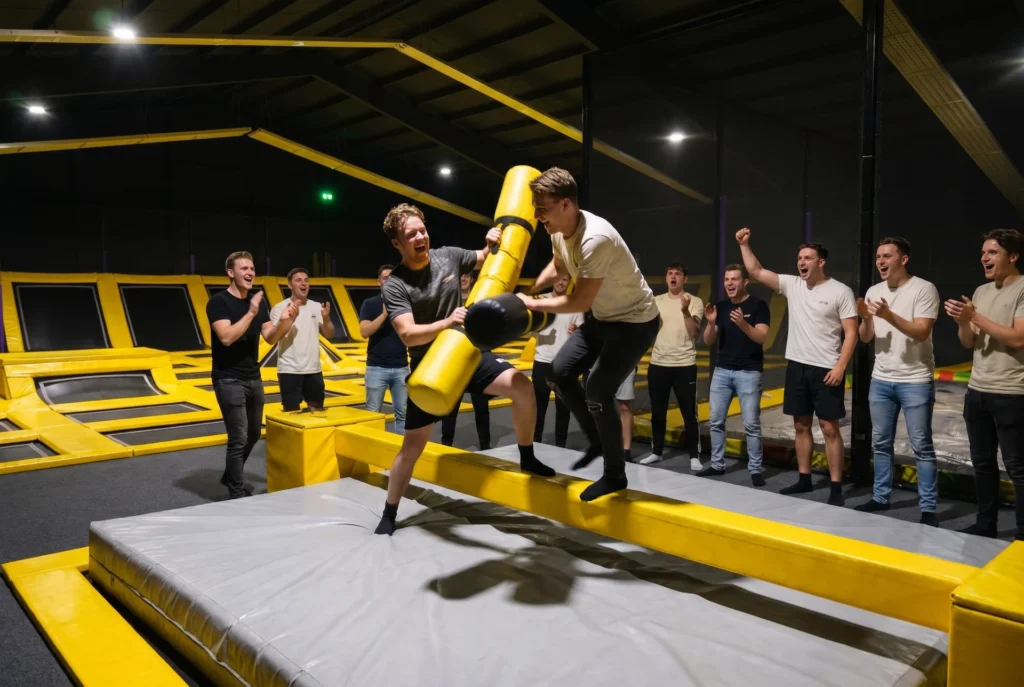
The safest session is one where everyone sticks to the basics. Come in comfortable sportswear, tie back long hair, listen to the jump coach, and build up slowly. Start with basic bouncing before heading to the battle beam or the dunk area. And don’t force anything: if you don’t feel ready for a flip, don’t do it. The foam pit is there specifically to practice things safely.
Do you just want to come and enjoy some safe jumping? Then book a slot for open jumping, or check out our options for group outings.